When One Tire Takes Down the Entire Trip
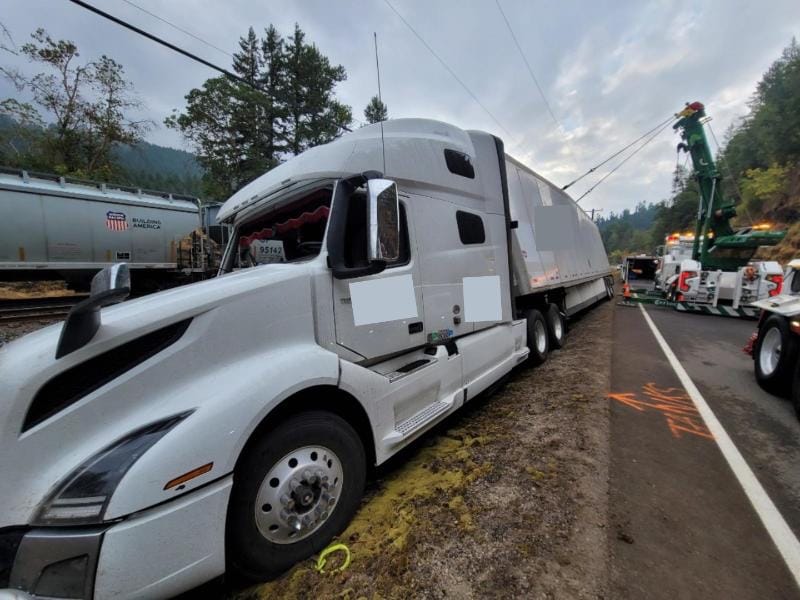
During our 15 years in business, we’ve seen our fair share of tire damage. Some incidents start like this: Freightliner runs off the shoulder after the driver rode a blown steer tire for almost a mile. The rim is gouged, the fender torn open, and the brake line had started to leak. What starts as a tire problem now turned into a Hwy 126 semi towing call because the driver kept rolling after the blowout. That extra mile will cost him an extra day and probably thousands in parts.
Blowouts can happen very fast and very unexpected. One second the road feels normal, the next second there is a loud crack and the whole cab jerks to one side. Traffic does not slow down. The shoulder may be gravel or dirt. The trailer is still pushing from behind. What a driver does in the next ten seconds usually decides whether we bring a service truck or a heavy wrecker.
How Tires Fail on Loaded Rigs
Heat, low pressure, worn tread, sharp debris, and overloading can all lead to a blowout. An underinflated tire flexes too much, builds heat inside the casing, and may let go under a heavy load. Steer tires can pull the front end hard, while outside drive tires can tear mudflaps, airlines, or rubber around the axle.
What to Do Right After the Tire Blows
The goal is control. Grip the wheel, ease off the throttle, and let the truck slow down on its own. Hard braking can make the trailer push or sway, especially if the shoulder is soft or uneven. Keep the rig straight, use the flashers, and wait for a safe spot to pull over.
Once stopped, stay out of traffic and set triangles only if it is safe. Do not walk around the rig with cars passing close. The worst move is trying to limp to the next exit on shredded rubber. The rim can dig into pavement, rubber can wrap around the axle, and brake or suspension damage can start fast.
Here is what not to do:
- Do not slam the brakes
- Do not yank the steering wheel
- Do not keep driving on loose rubber
- Do not ignore rim or axle damage
- Do not stand near live traffic
For Hwy 126 semi towing, we need the mile marker or nearest crossroad, direction of travel, failed tire position, trailer type, load status, and whether the truck still has air pressure. Those details help us send the right response the first time. A tire may cost a few hundred dollars, but the wrong move after a blowout can turn the call into a much bigger repair.
When a Blowout Becomes a Heavy Tow
A clean tire failure with no other damage may only need a roadside tire change. A blowout that tears into brake lines, locks up a wheel, bends a rim, or damages suspension usually means the truck cannot move safely under its own power. That is when Hwy 126 semi towing comes into play.
Our Hwy 126 semi towing crew looks at the tire position, the width of the shoulder, the weight of the load, and how much traffic is moving past the rig. If the truck is sitting in a bad spot or if moving it farther would cause more damage, we bring a wrecker and move the whole combination to a safer location. Sometimes the trailer stays put while the tractor goes for repair. Sometimes both need to move together. It depends on the cargo, the damage, and what the fleet needs next.
Puddle Jumper Towing Handles Hwy 126 Semi Towing After Tire Failures
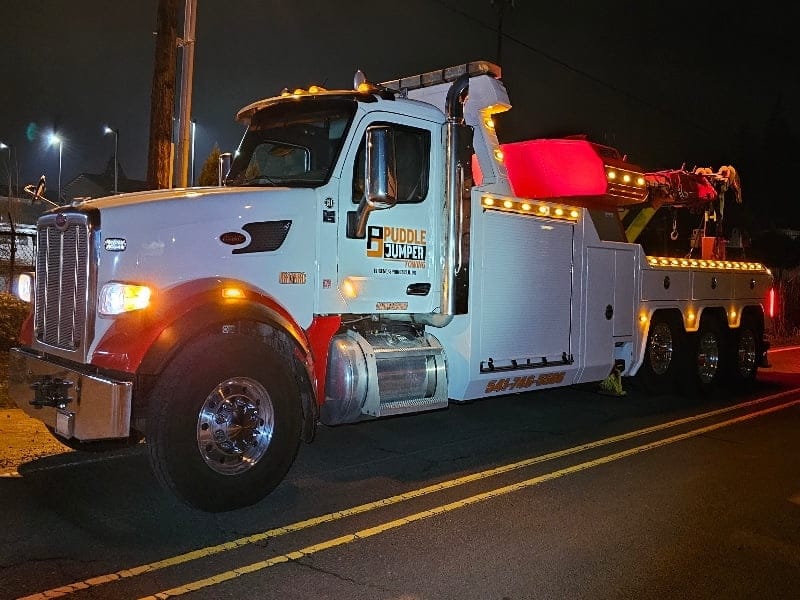
Puddle Jumper Towing is a family-run operation. Micky and Michael Clement lead our Hwy 126 semi towing team; a father-son team with decades of combined experience in automotive work, customer service, and heavy recovery. We run 24-hour dispatch, and our fleet includes wreckers, flatbeds, lowboys, and support equipment for larger roadside calls.
We handle Hwy 126 semi towing when a blown tire turns into brake damage, a disabled tractor, a loaded trailer problem, or a needed load transfer. We ask the right questions up front so we bring the right equipment and get the driver, truck, and load to the next safe step.
FAQs
What should a driver do first when a semi tire blows?
Hold the wheel steady and avoid hard braking. Ease off the throttle, keep the rig straight, and move toward a safe shoulder only when there is room.
Why is driving on a blown truck tire so risky?
Loose rubber can tear into brake lines, wiring, fenders, mudflaps, and suspension parts. The rim can also grind into the road and cause more damage.
Can a tire blowout damage the brake system?
Yes. Shredded tire pieces can hit air lines, brake hoses, chambers, and fittings. If the truck cannot build or hold air, it should not keep moving.
When does a blowout need a heavy wrecker?
A heavy wrecker may be needed if the truck has rim damage, brake damage, axle damage, suspension damage, or unsafe road position. A loaded trailer can also change the response.
What details should a driver give dispatch after a blowout?
Give the road marker, travel direction, tire position, trailer type, load status, and visible damage. Photos help the towing team choose the right equipment.
Why does shoulder width matter after a tire failure?
A narrow shoulder leaves less room for the driver, tow crew, and service truck. If traffic is passing close, the safer move may be towing the rig to a better location.