What Makes City Towing Its Own Discipline
The roads around Pleasant Hill and the broader Lane County area run from tight residential streets and small commercial blocks to the multi-lane corridors of I-5 and Highway 58. Our Pleasant Hill towing team works this full range, and the difference between a neighborhood recovery and a highway incident starts before the truck reaches the scene.
City calls place a premium on spatial awareness. Narrow driveways, low overhead clearances, parked vehicles on both sides of the street, and close-range traffic all demand a quick environmental read before any rigging begins. Experienced city operators make these assessments fast, and the speed comes from repetition across varied real-world environments over time.
The Highway Changes How We Work
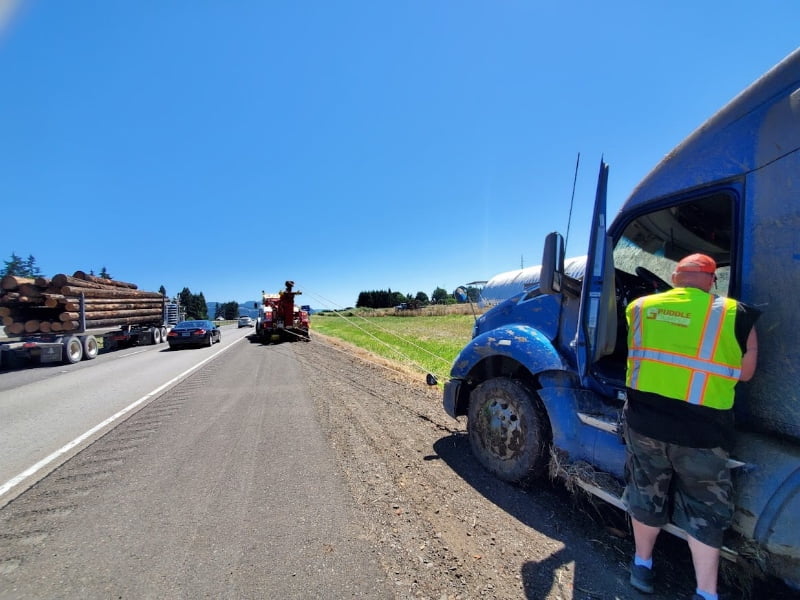
A highway call starts with a different first task: establishing scene control. High-visibility lighting goes up immediately because the exposure on an active shoulder is real from the moment the truck arrives. Positioning has to create a buffer between the work zone and passing traffic before any recovery work begins, and that buffer holds for the full duration of the job.
Equipment requirements on highway work scale considerably beyond what city units carry. Vehicles that have gone off the roadway, loaded commercial trucks, and rollover incidents all require configurations that a standard city unit cannot handle.
How a Car’s Location Determines the Recovery
A car sitting on a residential street and one sitting on an active highway shoulder represent two different recovery problems. Approach angle, equipment selection, lighting requirements, and time pressure all shift based on the surroundings. Our Pleasant Hill towing operators read the scene before they read the vehicle, because what is around the vehicle often determines more than the vehicle itself. That assessment happens in seconds, and it shapes every decision that follows.
What Each Road Type Requires From a Crew
The two environments typically break down like this:
City and local calls typically require:
- Compact wheel-lift units for residential street access
- Short-wheelbase trucks for tight driveways and narrow lanes
- Precise spatial judgment on overhead clearances and approach angles
Highway calls typically require:
- Flatbeds and heavy wreckers for off-road and high-damage vehicles
- Extended boom configurations and heavy rigging for commercial incidents
- High-intensity warning lighting and deliberate scene setup
Our Pleasant Hill towing dispatchers confirm the job details before dispatch because the right unit for a city call is rarely the right unit for a highway call.
Puddle Jumper Towing: The Pleasant Hill Towing Team That Goes the Extra Mile
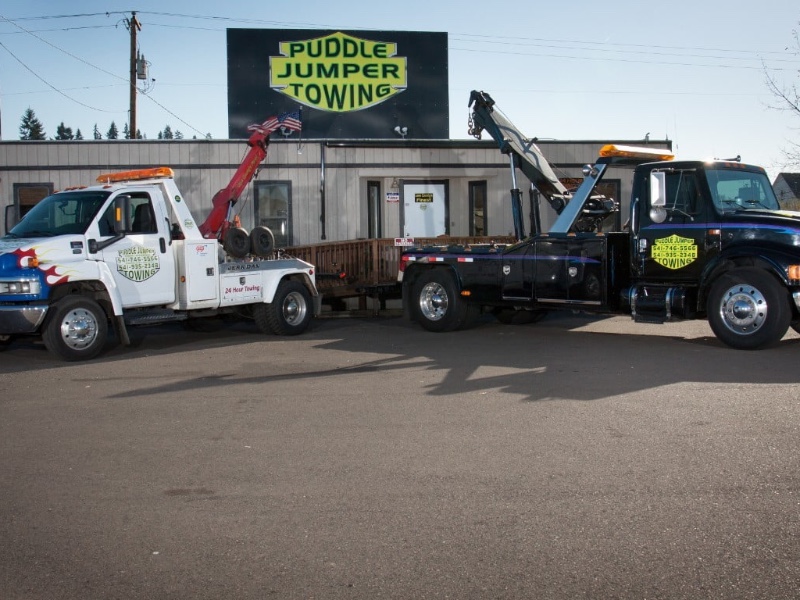
Puddle Jumper Towing is a father-son operation built on decades of combined experience. Michael holds WreckMaster 8/9R certification and trains for the Oregon Department of Transportation’s Traffic Incident Management program. Micky brings over 13 years in the automotive supply industry alongside his own WreckMaster 8/9R certification. Together they have built a Pleasant Hill towing reputation on five-star service and a straightforward standard: nobody gets left stranded, no matter how remote or complicated the call.
Our Pleasant Hill towing coverage runs across Lane County 24 hours a day with the equipment to handle light-duty, heavy-duty, and semi-tractor trailer recoveries. From the neighborhood streets of Pleasant Hill to the corridors of I-5 and Highway 58, every Pleasant Hill towing call gets the same level of preparation and the same focused response: show up ready and get the job done right.
FAQ
How do tow truck operators handle mountain road or low-visibility recoveries?
Mountain and low-visibility recoveries require operators to assess road width, grade, and surface conditions before positioning the truck. The approach angle on a narrow mountain road is often the most critical variable, and getting it wrong makes extraction harder or impossible. Experienced operators in mountain terrain use smaller or purpose-configured units and take extra time on scene assessment before any rigging begins.
What is WreckMaster certification and why does it matter?
WreckMaster is a professional training and certification program for towing and recovery operators. It covers vehicle recovery methods, rigging, scene safety, and commercial vehicle handling at progressive levels, with Level 8/9R covering the most complex recovery scenarios. Certification indicates a trained operator who meets industry standards, not just someone who has logged hours behind a wheel.
What should I do if I need a tow and do not know my exact location?
Stay calm and look for nearby landmarks, mile markers, road signs, or intersection names. If you have a smartphone, use your maps application to get GPS coordinates and share them with dispatch. Describe what you can see: the direction you were traveling, any visible businesses, and how long ago you turned off a major road. The more detail you can give, the faster the crew can locate you.
Is a flatbed or a wheel-lift better for a front-wheel-drive car?
A flatbed is generally the safer option for any vehicle when it is available. For a front-wheel-drive car with no drivetrain damage, a wheel-lift on the front wheels is also acceptable. The key variable is confirming that the vehicle has no damage that could be worsened by partial lifting. When in doubt, ask the operator to confirm the correct method for your specific vehicle before they hook up.
What is the difference between light-duty, medium-duty, and heavy-duty towing?
Light-duty covers standard passenger vehicles, SUVs, and light trucks. Medium-duty handles larger work vehicles, box trucks, and service vehicles that exceed light-duty weight limits. Heavy-duty covers semis, buses, large equipment, and anything requiring a commercial wrecker or rotator for recovery. The vehicle’s weight, size, and position all determine which category applies.
What happens to a vehicle after it is towed to a yard?
On arrival, the operator documents the vehicle’s condition and secures it in the storage area. The owner is notified and given information on how to retrieve the vehicle, including any applicable storage fees. Most yards require proof of ownership before releasing a vehicle. If insurance is involved, the insurance company may need to inspect the vehicle before it is moved again.