A Ditch, a Flatbed, and a Lot of Wet Oregon Ground
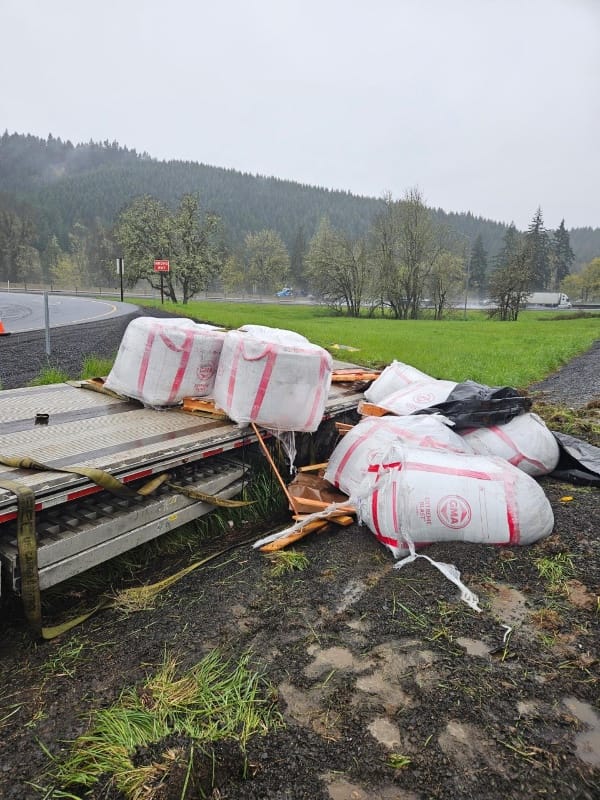
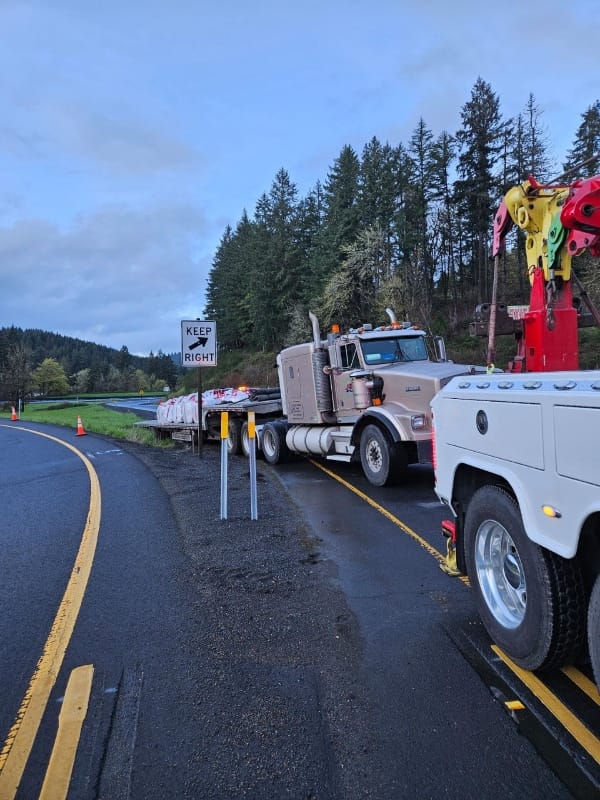
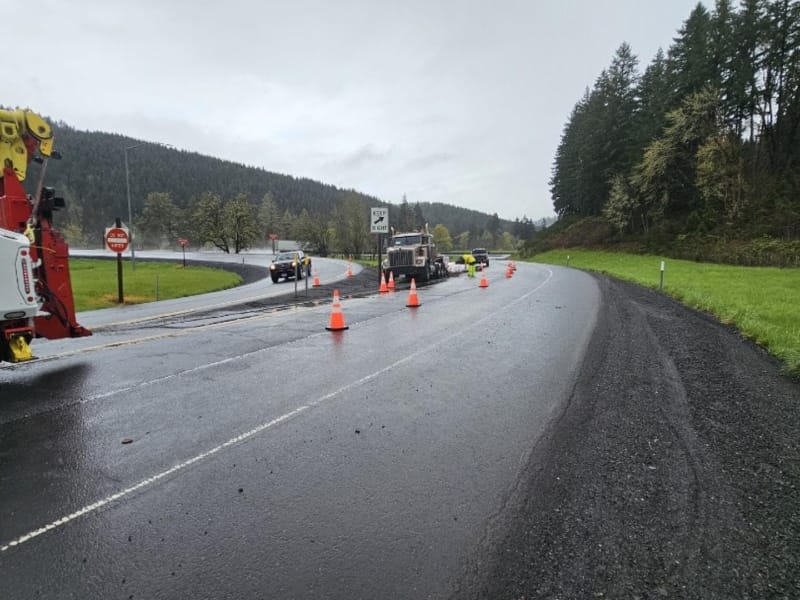
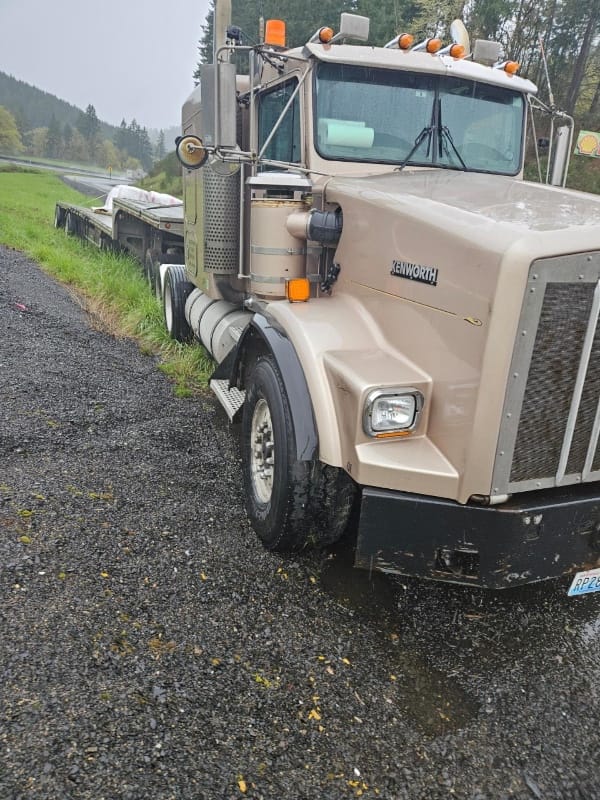
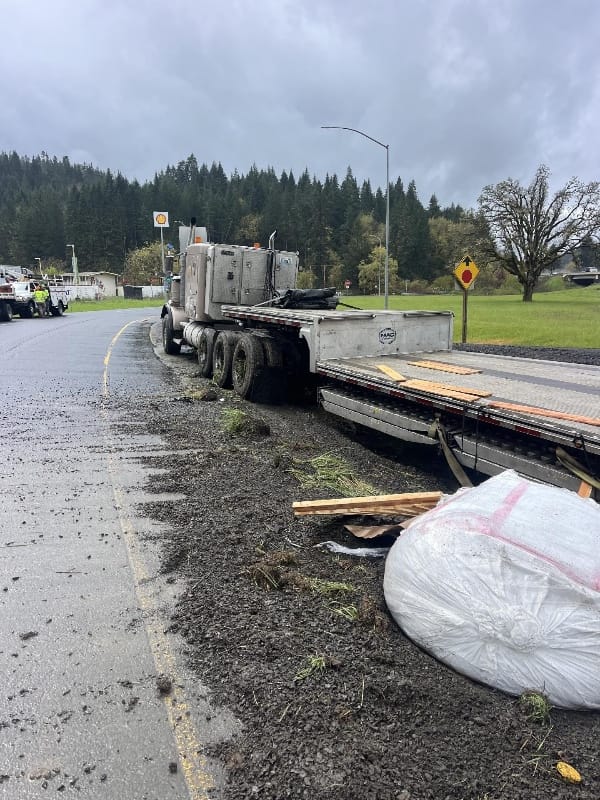
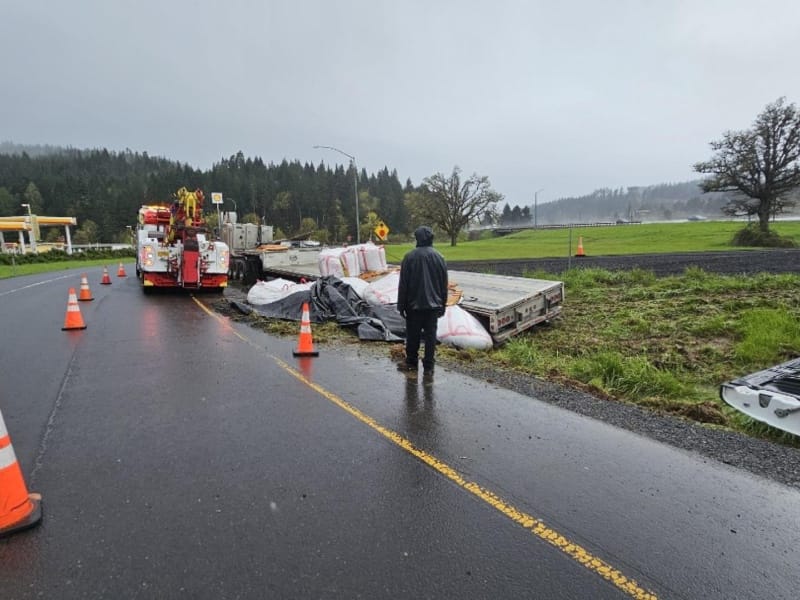
Rain changes the whole mood of a highway. On I-5, it can turn a shoulder into soup and a routine pull-off into a problem with weight, slope, traffic, and timing all stacked together. For this I-5 winch-out, we were called to a 2003 Kenworth T800 with a loaded flatbed trailer sitting in the ditch near mile marker 163 northbound. The trailer carried sand bag totes, which added a serious load to an already stubborn recovery. The truck and trailer had settled off the pavement, with mud packed around the tires and wet ground working against every move. We had to look at the angle, the cargo, the road, and the room we had before a single line went under tension.
The Load Made the Job Heavier
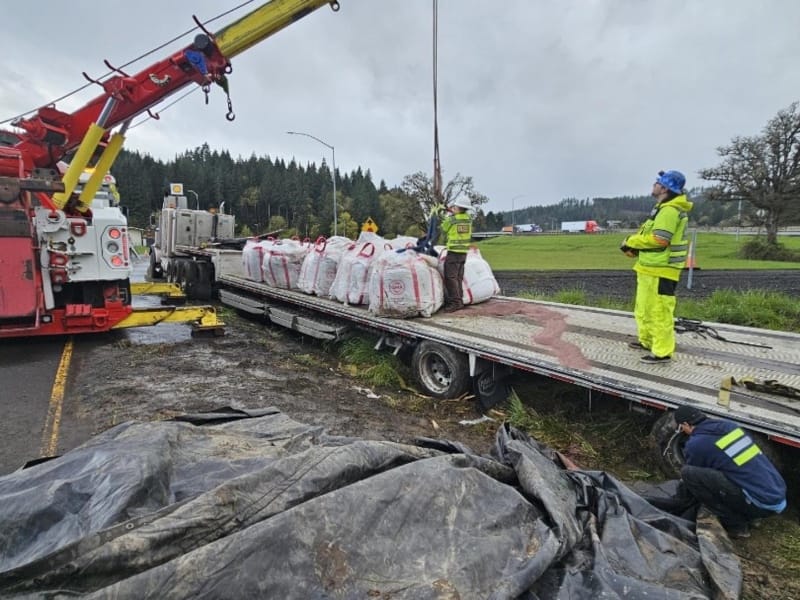
A tractor and flatbed already bring plenty of weight to the party. Add big totes of sand, wet weather, and a soft ditch, and the job gets a little more colorful. We treated the load as part of the recovery plan, because shifting cargo can change the pull fast.
The scene called for:
- Traffic control with cones
- Careful rigging points
- Crane and winch support
- Load awareness
- Slow, steady movement
Mud Had Its Own Opinion
Mud loves to grab tires, axles, and trailer edges like it paid rent there. The job required controlled pulls instead of brute force, because yanking on a loaded trailer can create new damage. We worked around the soft shoulder and watched the trailer’s reaction as tension built. Every few feet mattered.
The Weather Kept Things Interesting
Rain cut visibility, slicked the pavement, and made footing rough for everyone on scene. During an I-5 winch-out, the weather affects more than comfort. It changes traction, communication, and how much room crews have to work. We kept the setup organized so the recovery did not turn into a roadside circus.
Why Heavy-Duty Recovery Takes Patience
A loaded Kenworth T800 does not hop out of a ditch because someone gets impatient. This I-5 winch-out needed measured movement, load control, and enough restraint to let the equipment do the talking. The trailer had to come back toward stable ground without digging deeper into the shoulder. That slow pace saved time in the long run.
Lessons Learned From This Recovery
The biggest lesson from this I-5 winch-out is that the shoulder can lie. It may look firm from the cab, then collapse under a loaded rig. Wet gravel, grass, and mud rarely give a heavy truck much forgiveness. Once the trailer drops, the recovery becomes a full-size math problem with mud on its boots.
Puddle Jumper Handles the I-5 Winch-Out Calls That Get Messy
At Puddle Jumper, we handle heavy-duty towing, winch-outs, recoveries, and roadside help for trucks that find trouble in very real places. This I-5 winch-out showed the kind of work we prepare for: loaded equipment, bad weather, tight shoulders, and plenty of mud. We bring the right trucks, the right rigging plan, and a crew that knows how to slow the job down before the job gets louder.
For drivers, fleets, and operators, Puddle Jumper is ready for heavy-duty calls that need more than a quick tug. We respond to winch-outs, accident recoveries, tractor-trailer problems, and towing calls across the routes our customers depend on. This I-5 winch-out had rain, sand bag totes, a ditch, and a Kenworth with no interest in leaving quietly. We got to work anyway.
FAQs
What should a driver do right after a truck slides into a ditch?
Stay in a safe location and avoid trying to drive out if the ground feels unstable. Turn on hazard lights and place warning devices if it is safe to do so. Calling for professional help early prevents deeper damage.
Can cargo shift during a recovery?
Yes, especially with loose or heavy materials like sand or gravel. Crews monitor the load closely and adjust the approach to keep everything balanced. Sudden movement can change the direction of the pull.
How long does a heavy-duty recovery usually take?
It depends on the load, terrain, and weather. Some jobs wrap up quickly, while others take time due to setup and safety checks. Rushing rarely helps in these situations.
Is it safe to stand near the vehicle during a winch operation?
It is best to keep distance unless you are part of the recovery team. Tensioned lines and shifting vehicles can create unexpected movement. Crews set up safe zones for a reason.
Why does rain make roadside situations harder to handle?
Water reduces traction and weakens the ground under heavy vehicles. It also affects visibility and footing for crews working nearby. These factors slow down the process.
Can a fully loaded trailer always be recovered without unloading?
Not always. In some cases, part of the load may need to be removed to reduce weight or improve balance. Each situation gets evaluated before work begins.