Heavy Problems, But Smart Moves
A tracked excavator slid halfway into a drainage ditch after the edge of a job site gave way during a week of steady rain. The operator climbed out without a scratch, but the machine wasn’t going anywhere under its own power. Calls like that usually turn into Eugene heavy equipment transport jobs because getting damaged equipment off a site takes more planning than simply loading it onto a trailer. We’ve learned that the decisions made during the first hour after an accident often determine how much additional damage the machine suffers.
Since we started Puddle Jumper Towing, we’ve responded to everything from construction site mishaps to equipment stuck in mud, soft shoulders, and steep access roads. Every recovery is different, but the goal stays the same. Get the machine moved without making the situation worse.
Inspect the Machine Before You Try to Move It
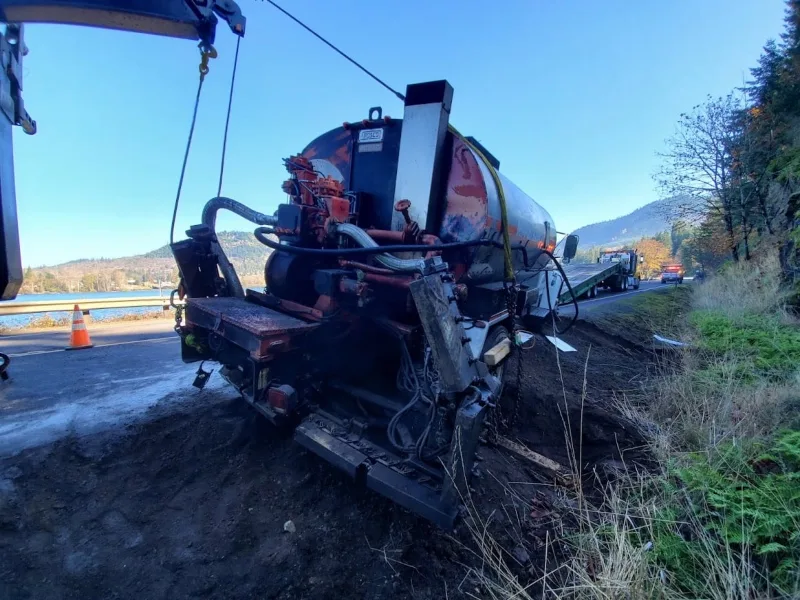
It’s tempting to fire the machine back up and see if it will still run. We don’t recommend that until someone has looked it over. Hydraulic leaks, bent steering components, damaged tracks, or cracked frames are not always obvious from the operator’s seat. A machine that drives onto a trailer under its own power can end up with much more expensive damage if something fails halfway through the loading process.
Ground conditions also play a big role. Soft soil, loose gravel, and uneven grades can make loading dangerous. We’ve arrived at sites where several unsuccessful attempts had already buried the equipment deeper. Taking a few extra minutes to build a recovery plan usually saves hours later. That’s true on almost every Eugene heavy equipment transport call we handle.
The Right Trailer Is All It Takes
Heavy equipment comes in every shape and size. A compact skid steer, a wheel loader, and a full-size excavator all require different loading methods. Weight distribution, attachment placement, and overall machine stability all affect how the trailer is set up before loading begins.
Before we load, we usually check:
- Tire or track condition
- Hydraulic or fuel leaks
- Attachment position
- Ground stability around the machine
- Proper tie-down locations
We’ve found that rushing through these steps often creates new problems. Every Eugene heavy equipment transport job deserves a loading plan that fits the equipment instead of trying to force the equipment to fit the trailer.
Documentation Helps Long After the Recovery
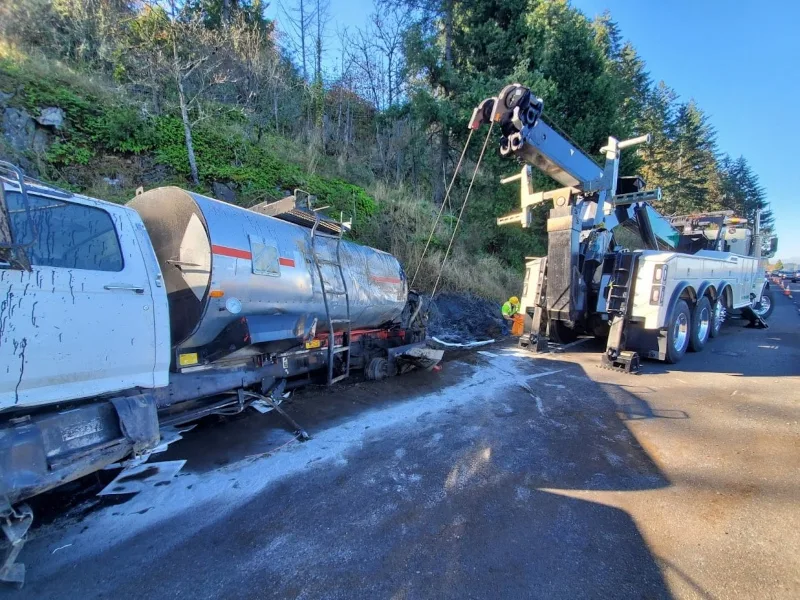
Photos are one of the easiest ways to protect everyone involved. We encourage owners and contractors to photograph the machine before it gets loaded, including the surrounding area and any visible damage. Insurance adjusters, rental companies, and repair facilities all benefit from having a clear record of the machine’s condition before transport begins.
It also helps to know exactly where the equipment is going before the truck arrives. We’ve hauled damaged machines to dealer service centers, contractor yards, rental companies, and repair facilities. Showing up at a locked gate after business hours delays the entire Eugene heavy equipment transport process and keeps both the truck and trailer tied up longer than necessary.
Puddle Jumper: Making Smart Moves With Our Eugene Heavy Equipment Transport Service
Puddle Jumper has been solving difficult towing and recovery problems for more than a decade. Founded by a father and son who combined automotive experience with a passion for customer service, we’ve built our reputation by taking on jobs that other companies often pass by. Our WreckMaster-certified operators continue their training and also work with the Oregon Department of Transportation’s Traffic Incident Management program, giving us practical experience with complex recoveries and incident response.
Every Eugene heavy equipment transport call is approached with the same mindset. Slow down, assess the situation, and choose the safest way to move the machine. Whether the equipment is sitting in soft ground, damaged after a rollover, or stranded where few others are willing to go, we have the trucks, trailers, and experience to get it where it needs to be. Our Eugene heavy equipment transport team believes that every recovery deserves a solution, and that’s how we’ve approached towing from the very beginning.
FAQs
Can heavy equipment be transported if it won’t start?
Yes. Specialized recovery equipment can load machines that are disabled or have major mechanical damage. The transport method depends on the machine’s condition and location.
Should I clean damaged equipment before it gets moved?
No. Leave it as it is unless there is a safety concern. Dirt, debris, and damage patterns may be important for insurance inspections or repair estimates.
What if the machine is sitting on unstable ground?
The recovery team may need to stabilize the area before loading begins. Pulling equipment too soon can cause it to sink farther or tip over.
Do attachments need to be removed before transport?
Not always. Some attachments can stay in place if they are secured correctly, while others may need to be removed because of size or weight restrictions.
Who decides where the equipment is taken?
That depends on the situation. The owner, contractor, rental company, or insurance provider may choose the destination based on repairs or inspections.
Can damaged equipment be stored before repairs are arranged?
Yes. Secure storage is often available if repairs cannot begin right away. That gives owners and insurance companies time to decide on the next steps.