Heavy Recovery When Winter Hits the Grades
Winter in and around Eugene, OR, can look manageable. Until cold rain, slush, and quick snow showers hit the valley and the passes. Then the hazards stack up fast: potholes hidden under standing water, oil slicks during the first rains after a dry stretch, and black ice that forms overnight on bridges, shaded curves, and ramps. For truckers, that mix of steep grades, heavy loads, and tight delivery windows turns a normal run into a high focus drive. One small loss of traction can push a rig into a slide, a soft shoulder, or a ditch. For our I-5 heavy towing team, each storm brings more calls. More lane control. And more recoveries in tight areas where there is limited room to work and traffic is impatient.
Winter Response Lineup
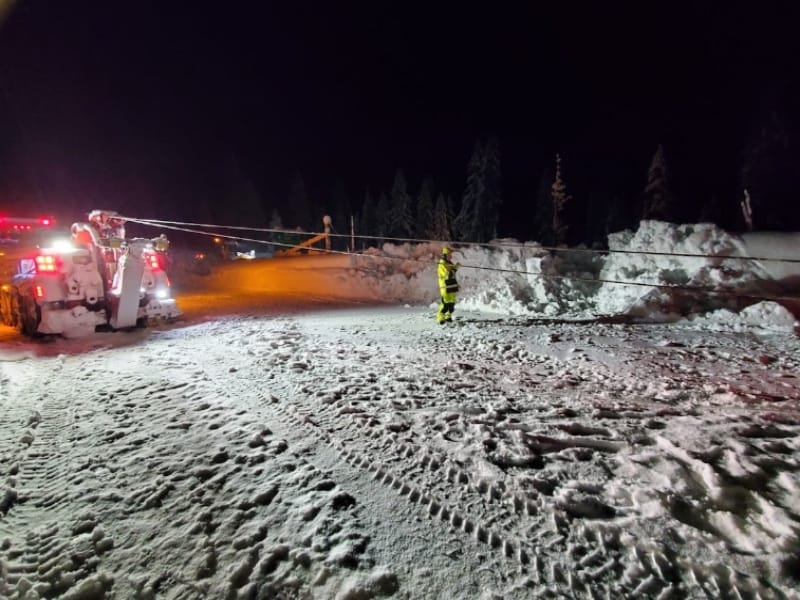
When winter hits, we rely on a full lineup of services built for the worst conditions on I-5 and the surrounding passes. In many accident situations we can bill insurance:
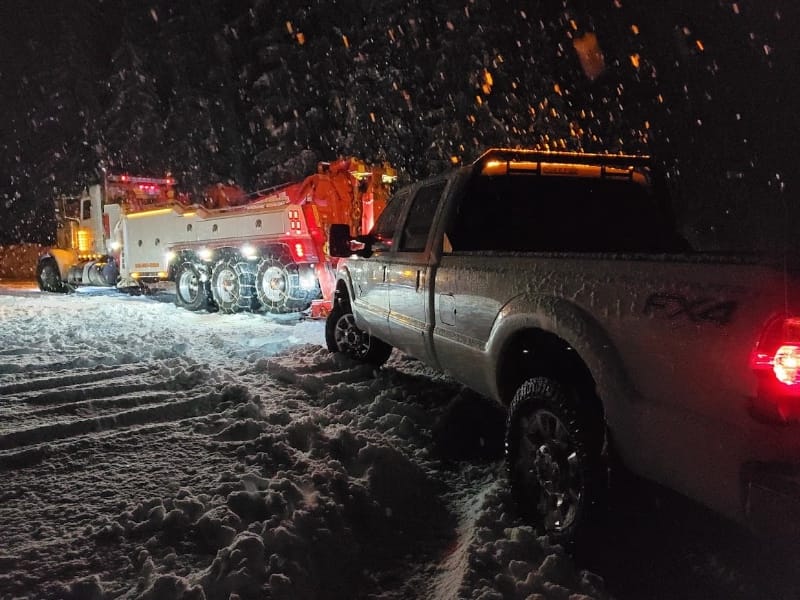
- Winter semi towing for breakdowns and traction loss on slick shoulders and grades
- Snow winch outs when tractors and trailers slide into ditches, berms, or soft snow
- Full crash recoveries in curved, narrow pass sections where controlled movement matters
- On scene traffic flagging during recovery operations so work zones stay organized and drivers get clear direction through the area
- Snow chain delivery, sales, and installation for commercial vehicles so fleets can prepare before they hit the toughest stretches
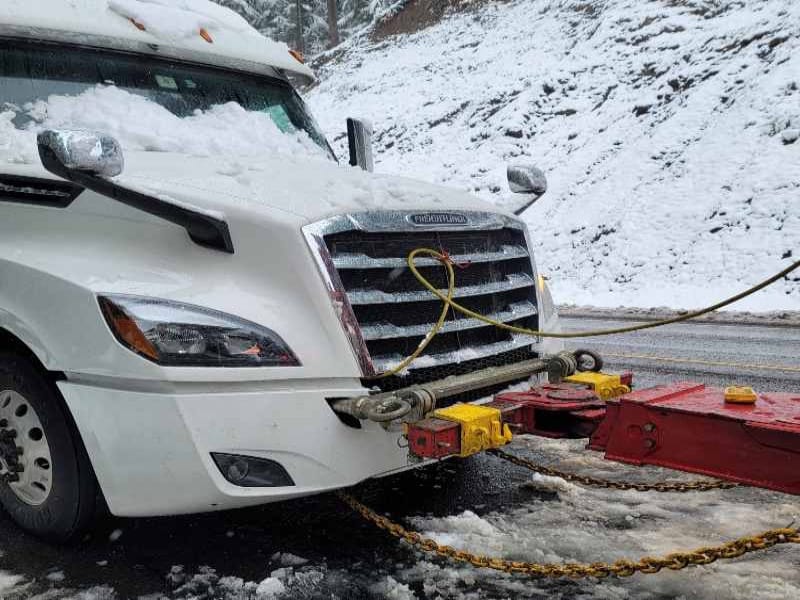
A key piece of that capability is our 50-ton mobile rotator. Because it mounts on a truck chassis, we can drive it straight to the scene, set up in the space we have, and start work without long build times. The boom rotates 360 degrees, giving us reach over obstacles and the ability to lift and reposition loads while keeping the truck staged in a controlled footprint.
Our Rotator: The Star of the Heavy Recovery Toolkit
Winter incidents are rarely “hook and go.” Trailers lean at odd angles, tractors pivot into guardrails, and cargo can shift in ways that demand controlled lifting instead of brute force pulling. With the rotator, we can support, upright, and reposition equipment in a more measured way that helps protect the roadway, reduces additional damage risk, and clears lanes faster.
That same I-5 heavy towing setup also helps when debris or heavy materials block travel lanes after a winter crash. Rather than waiting for separate lifting gear, we bring the rotator to the scene and work around guardrails, ditches, and plow berms that can slow down more rigid equipment.
I-5 Heavy Towing: When the Passes Turn Icy, Puddle Jumper is Ready to Roll
Our I-5 heavy towing team works inside the same winter patterns that challenge everyone in and around Eugene. That’s why our operations stay geared for sudden calls when conditions change. We respond with the rotator, support trucks, and trained I-5 heavy towing crews who can manage complex recoveries. That includes flagging and coordinating with other responders while traffic moves through.
At Puddle Jumper, we go the extra mile because winter problems do not wait for a convenient time. When you call, our goal is to get help moving fast and to keep the scene organized from the first setup to the final clear. We provide I-5 heavy towing 24 hours a day, 7 days a week, 365 days a year. So you are not stuck waiting while conditions get worse. Our I-5 heavy towing team is built to handle everything from passenger vehicle towing to heavy duty truck towing and semi tractor trailer towing when the stakes are high and the shoulder is tight. No matter the hour, we bring the equipment and the plan to get your vehicle stabilized, recovered, and headed where it needs to go.
FAQ
What should I do first if my semi loses traction or slides off the road in winter weather?
Move to a safe spot if you can. Turn on hazard lights, and stay in the cab with your seatbelt on if conditions are dangerous outside. Call for professional recovery early because continued spinning or repeated pull attempts can worsen the position and increase damage.
When is a winch out the right solution instead of a standard tow?
A winch out is often the best option when a tractor, trailer, or combination unit is off the travel lane but not fully disabled, such as in a ditch, on a soft shoulder, or hung up in snow. It focuses on controlled repositioning back onto stable pavement before any towing happens.
Why can winter recoveries take longer than a normal tow?
Ice, low visibility, and limited safe staging space force slower, more controlled steps. Crews may need traffic control, extra rigging, or multiple trucks to keep the recovery stable and reduce the risk of secondary incidents.
How do recovery teams prevent additional damage during an uprighting or heavy pull?
They use planned anchor points, proper rigging angles, and slow tensioning to keep loads balanced. The goal is to support and guide the vehicle, not drag it, which helps protect the drivetrain, frame, and trailer structure.
Do I need to have chains on board, and when should I put them on?
If you run routes that cross higher elevations or areas with frequent chain requirements, carrying chains is a smart baseline. Install them before you lose momentum or get forced onto a narrow shoulder, because waiting until you are stuck is when injuries and traffic risk go up.
Can towing and recovery be billed to insurance after a winter crash?
Often yes, especially when the recovery is tied to a covered accident, but it depends on your policy and the circumstances. The fastest path is to document the scene, keep your claim details handy, and ask what information the provider needs for reimbursement or direct billing.